Character Progression in RPGs: Why Every Level Matters
There's a particular feeling at the table when the Game Master looks up and says, "Alright — you hit level four." It's not just that a number changed. The fighter who could barely survive a trap at level one is the one who walked away from the ogre ambush at level three with three hit points and a scar. The wizard who had to hoard two spell slots is now thinking in terms of what sequence opens the fight. Level up isn't a milestone. It's a transformation — and every player knows the difference between a game that marks that transformation and one that just says the words.
What Character Progression Actually Is
Character progression is the mechanical system that connects what your Hero does in the world to who they become over time. In the best RPG experiences, experience becomes identity. The sessions you survive, the choices you make, the enemies you outlast — all of it accumulates into a character that is genuinely different from the version you started.
This matters for investment. When a player knows that the risks they take now will shape the options they unlock later, every decision has real weight. The barbarian who charges into danger isn't reckless — they're earning the rage they'll unleash at level six. That's the engine underneath character progression: the sense that the game is paying attention and rewarding the things you actually did.
How Leveling Up Works in a d20 Fantasy System
Most modern fantasy RPGs follow a common progression framework rooted in the d20 tradition. Understanding the mechanics explains why leveling up is a genuine event rather than a cosmetic update.
When a character advances to a new level, several things happen simultaneously:
Hit points increase. Your character rolls (or takes a fixed value for) their class's hit die and adds their Constitution modifier. A fighter might roll a d10, a wizard a d6. The number is small, but its meaning is cumulative — by level five, the fighter who barely survived is durably, mechanically different.
Proficiency bonuses tick up. Starting at +2 at level 1, the proficiency bonus rises every four levels (to a maximum of +6 at level 17). This applies to every skill check, saving throw, and attack that benefits from proficiency — so progression is felt across nearly every dice roll.
Class features unlock. This is the heart of advancement. Most fantasy systems award new abilities at nearly every level: the rogue's Uncanny Dodge, the cleric's Channel Divinity, the ranger's Extra Attack. These aren't passive buffs — they're new tools, new options in play, new questions about how you want to run the next encounter.
Spellcasters gain slots and spells. For spellcasting classes, each level is a cascade of new possibilities: higher-level spell slots that can upcast existing spells, new spells to add to the known or prepared list, sometimes an Ability Score Improvement that nudges core stats.
Ability Score Improvements (ASIs) or Feats. At intervals (typically levels 4, 8, 12, 16, and 19 in many systems), characters either boost a core stat or choose a feat — a specialized ability that defines a particular build. This is the moment of maximum personal expression. You're not just leveling up; you're deciding who this character is becoming.
The full event takes real time. You roll for HP, write down new numbers, write in new features, make real choices. The character sheet after a level-up is visibly different from the sheet before it.
Why Most AI RPGs Get This Wrong
The problem with AI-native RPG tools isn't that they don't mention leveling up. Many of them do. The problem is that they can't mechanically enforce it.
When an AI dungeon-style platform tells you that you've gained a level, there's nothing persistent about it. The AI doesn't maintain a character sheet. There's no system tracking your hit points, no persistent rules engine updating your proficiency, no database row that now reflects "Ranger, Level 5." The next scene, the AI might forget the level entirely — or apply inconsistent ability checks because it's generating from context rather than state.
This is the core failure: level up as narration isn't the same as level up as a game event. It's a compliment, not a mechanical transformation. The player has to remember what changed. The AI has to be reminded. The sheet never updates because there is no sheet.
For anyone who's played real tabletop RPGs, this gap is immediately obvious and deeply unsatisfying. It's the equivalent of a referee announcing that you scored a goal but leaving the scoreboard unchanged.
What Real Character Progression Feels Like
When leveling up is a real mechanical event, it has a distinct shape:
The pause. Something happens mid-session (or the session ends) and the Game Master stops the action to mark the advancement. You know it's real because the game stops for it.
The choices. You look at your class progression table and make actual decisions — which feat, which subclass ability, how to spend your ASI. These are meaningful choices that can't be reversed. You're defining something.
The update. The character sheet changes. Numbers are written or updated. New abilities appear in the list. The object representing your character now reflects who they are after the milestone.
The difference in play. The next session, the character plays differently — not because you're narrating them differently, but because the system enforces new options. The paladin can smite in a way they couldn't before. The druid can wild shape into forms they couldn't access. The game knows.
These four steps are what separate mechanical character progression from narrative decoration. The emotional payoff follows from the mechanical reality. If the system doesn't actually update, the feeling doesn't actually arrive.
Progression Across Different Playstyles
Not all fantasy RPGs use the same advancement trigger, and that's fine. The specific method matters less than the consistency.
Experience points (XP). Traditional advancement: enemies defeated and objectives completed award XP, which accumulate toward a threshold. Predictable pacing, transparent math. Works well for groups who like clear progress indicators.
Milestone leveling. The Game Master decides when advancement happens — typically at narrative moments (end of a dungeon, completion of a story arc, a major revelation). Less math, more dramatic weight. Works especially well when the narrative is doing the pacing.
Hybrid systems. Some modern games mix both: XP for encounters, but gated advancement at story beats. The character advances when both systems agree the time is right.
In solo play specifically, the advancement trigger is less important than the fact that it triggers — that something actually happens, the sheet updates, and the next session begins from a new baseline.
The Solo Campaign Advantage
One of the underrated benefits of solo RPG play is advancement pacing. You control when sessions end, which means you control when the next level-up arrives. There's no table consensus to negotiate. There's no "we'll level up next week when everyone's here."
In a solo campaign, leveling up is entirely personal history. The barbarian who hit level five survived three sessions of brutal hex-crawl, a betrayal in the city, and a duel they almost lost. Every one of those sessions is their sessions. The HP roll that determined whether they were a 42-HP barbarian or a 46-HP barbarian happened in their game.
This is why character progression matters especially for solo players. In group play, advancement is partly a shared event — the whole party levels up together. In solo play, every level is yours alone. It's the record of what happened. When the game tracks it properly, the character sheet is a kind of memoir.
What to Expect From RoleForge's Level Up
Level Up is one of the most-requested features on RoleForge's roadmap — currently #2 by community demand. The design was never "the AI says you leveled up." It was: hit a new level, choose how your character grows, roll hit points, unlock new power, and write every change onto a living character sheet the Game Master actually reads.
That flow is live in the build. Here's what it looks like with Drax Flameheart, a Level 1 Dragonborn Barbarian who's earned enough XP to advance.
Sneak-peek screenshots like these land in the RoleForge Discord first — Discord members review work-in-progress UI with the founders before anyone else sees it on the site. If you want that early look (and a say in what we ship next), join there.
The sheet tells you before you ask
When Drax hits the XP threshold, the character sheet doesn't wait for a narrative cue. A Level Up Ready badge appears next to his name. The XP bar fills to 300 / 300. A callout — Level 2 awaits — spells out the transition and puts Begin Level Up on the sheet itself.
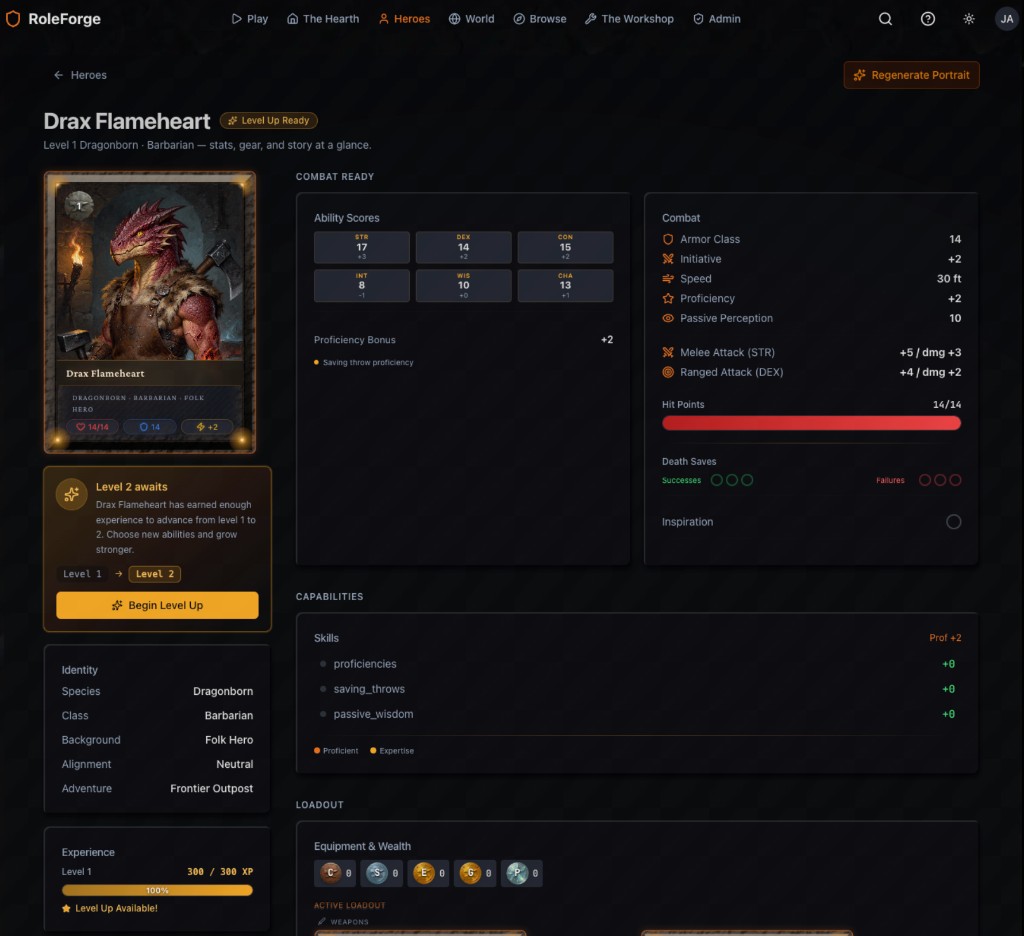
This is the proof most AI RPGs skip: progression is state, not prose. The same sheet that tracked Drax's STR 17, 14 HP, and Folk Hero background is the sheet that knows he's ready to grow.
Preview what you're about to unlock
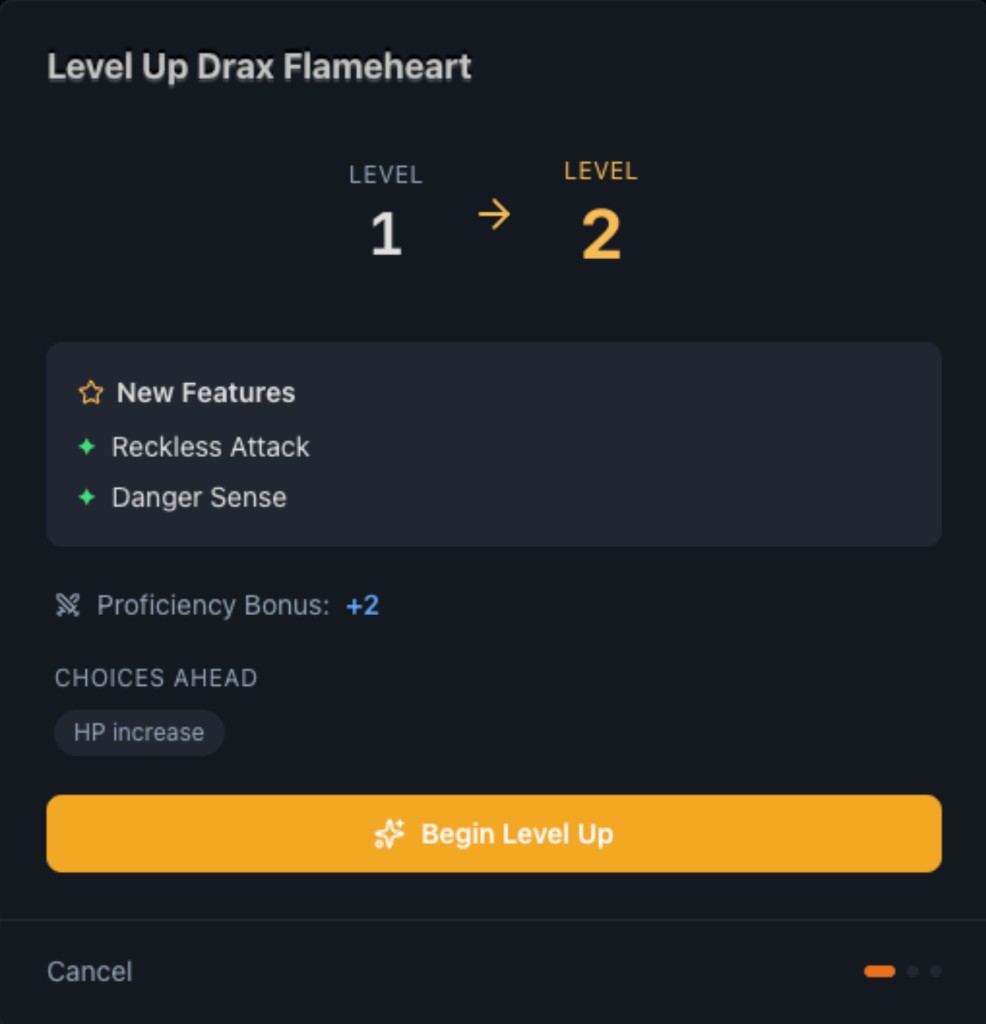
Tap through and the level-up flow opens with the moment tabletop players recognize: Level 1 → Level 2, the new features you'll gain, and the choices still ahead.
For Drax, Level 2 brings Reckless Attack and Danger Sense — real Barbarian features, not flavor text. Proficiency stays visible. HP increase is flagged as a choice you still have to make. Then Begin Level Up starts the sequence.
Hit points: roll the die or take the average
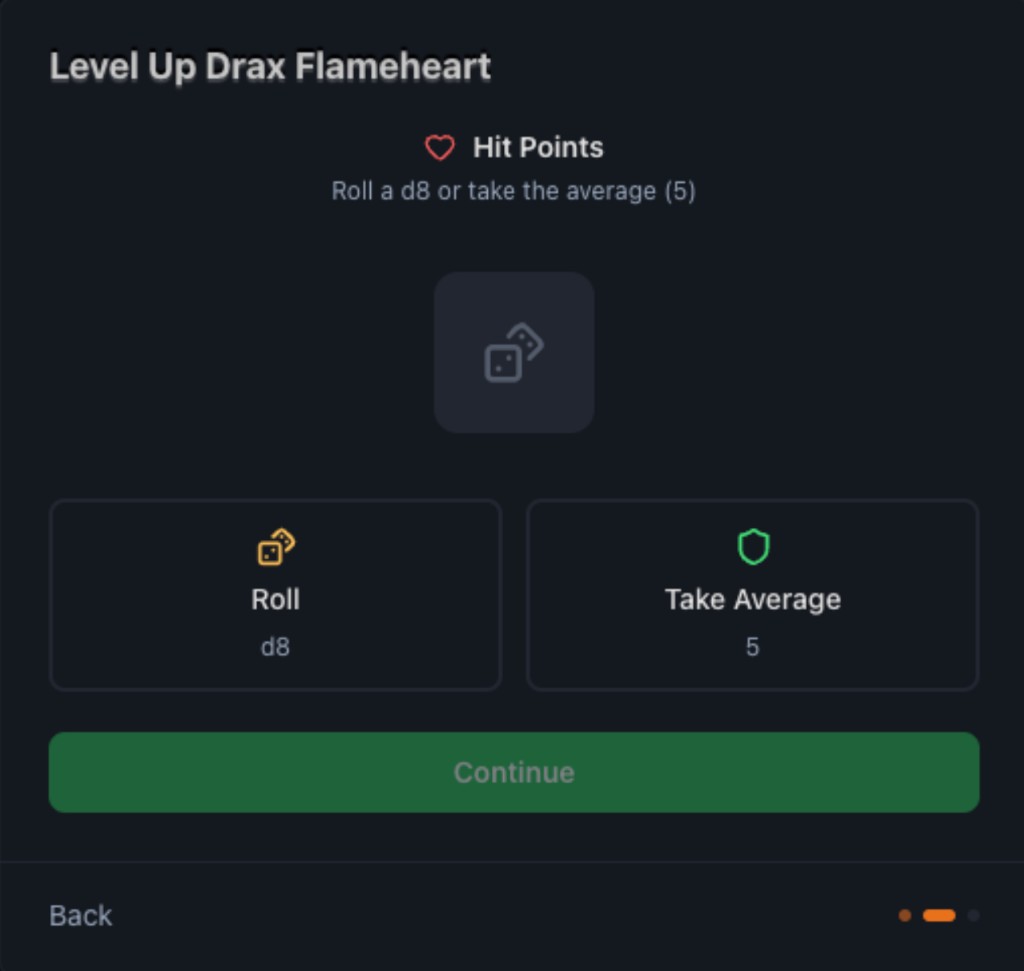
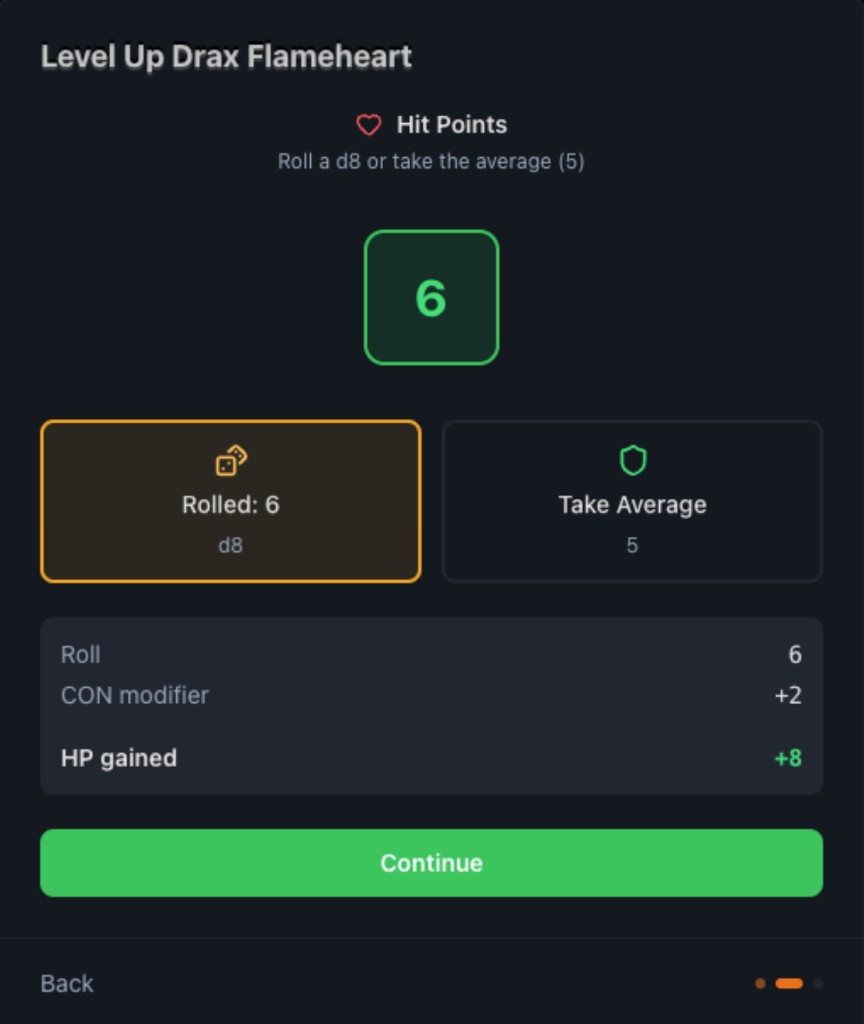
Next step is the HP decision every table knows. Roll a d8 for a Barbarian, or take the average (5). Same rule, same tradeoff — variance versus certainty — with the Constitution modifier applied after.
Choose roll and the die is in play — not a hidden random number behind a sentence.
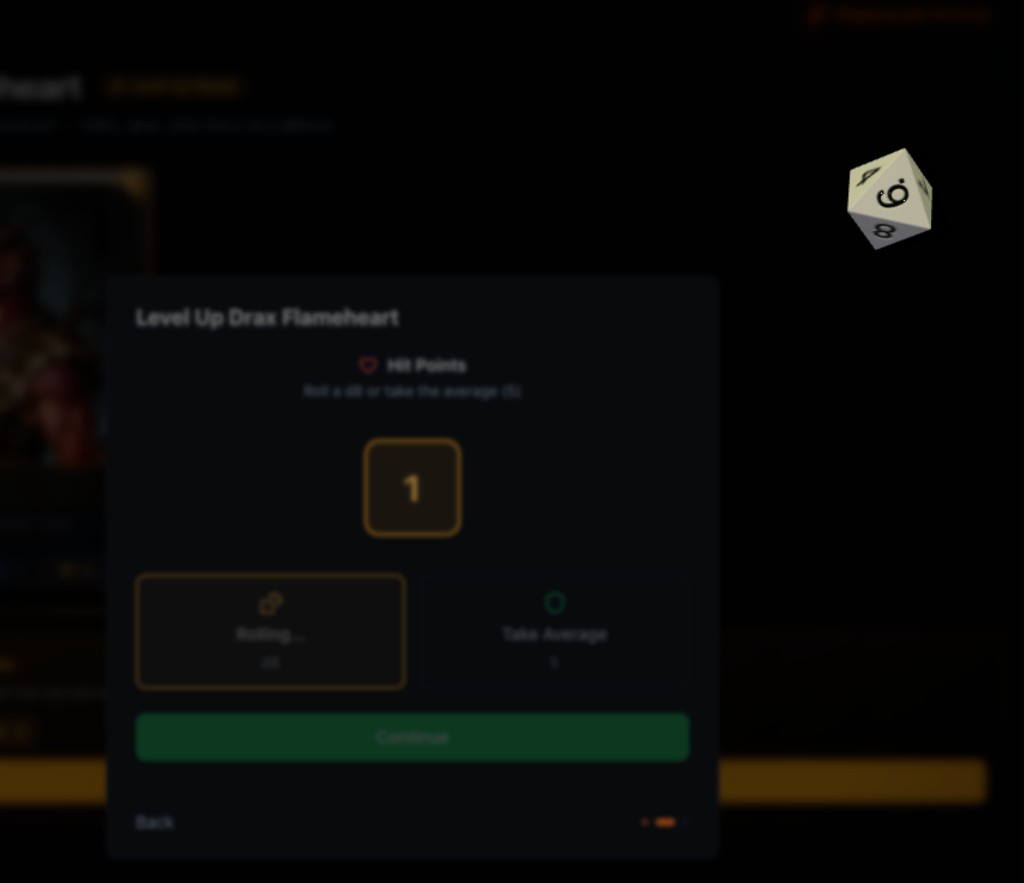
Land the roll and the math is explicit: Roll 6 + CON +2 = +8 HP gained. You can still see the average option you didn't take. Continue when you're satisfied.
Confirm — then celebrate
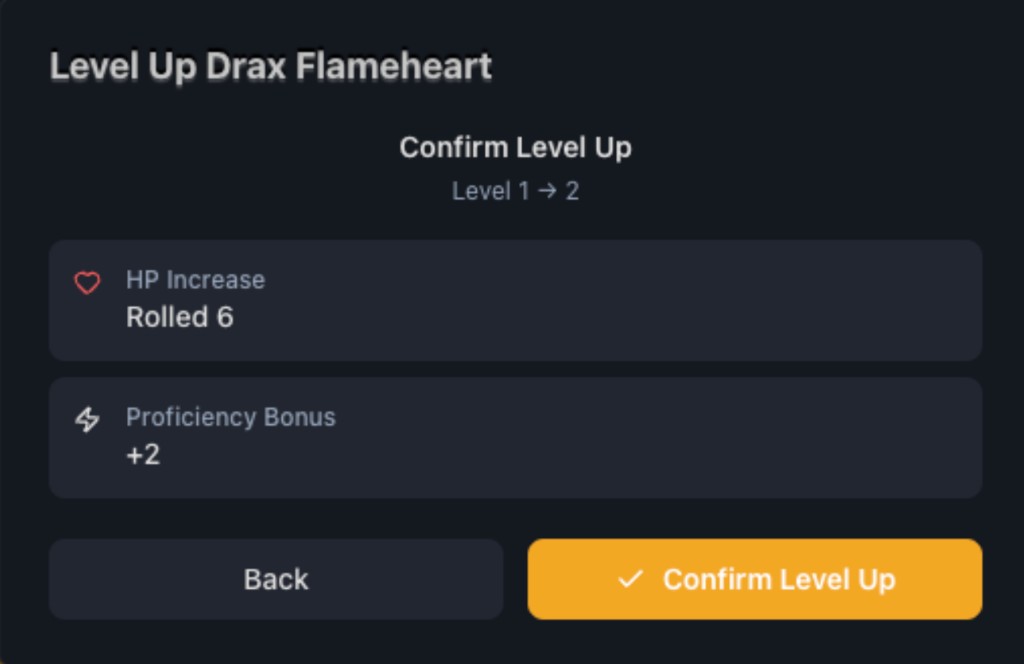
Before anything commits, you get a confirmation screen: Level 1 → 2, the HP increase you chose, proficiency context, and a clear Confirm Level Up.
Confirm, and the celebration screen lands: LEVEL UP, 2, +8 HP, Reckless Attack, Danger Sense. The sheet updates. The next scene, the AI Game Master knows Drax is Level 2 — because the rules state changed, not because a chatbot remembered a paragraph.
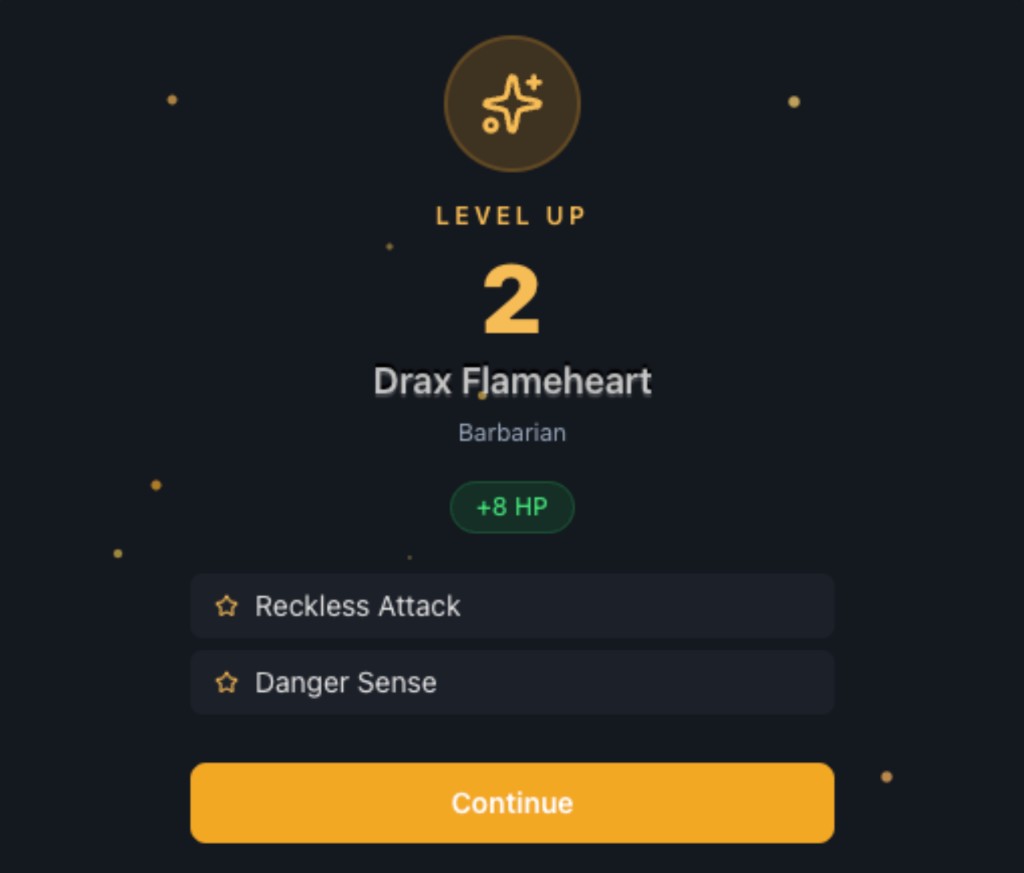
That is the difference between a game that marks the transformation and one that just says the words.
RoleForge is still pre-alpha. If mechanical character progression matters to your campaigns — solo or otherwise — join the waitlist. And if you want the next round of screens before they hit the blog, join us on Discord — that's where sneak peeks get reviewed with the community first. Level Up is the kind of moment we're building the whole game around.
Frequently Asked Questions
What is character progression in an RPG?
Character progression is the mechanical system by which a character advances in power and capability as they gain experience. In most fantasy RPGs, progression is tied to leveling up — a specific event that grants new hit points, class features, spell slots, and the ability to make meaningful choices about your character's development.
How does leveling up work in a d20 fantasy RPG?
When you level up, your character gains hit points (rolled from your class's hit die plus your Constitution modifier), a potential increase to your proficiency bonus, new class features, and in some cases an Ability Score Improvement or feat. For spellcasters, leveling also grants new spell slots and often new spells to learn or prepare. Each level is a discrete event — tracked on your character sheet — that mechanically changes how you play.
Why does character progression matter for solo RPG players?
Solo RPG players have full pacing control over their campaigns, which means every level-up is entirely personal. The advancement is tied directly to your sessions, your choices, and your survival. When the game tracks progression properly, the character sheet becomes a record of what your hero has lived through — not just a list of numbers.
Do AI RPG tools support real character progression?
Most AI dungeon-style RPG platforms don't maintain a persistent rules state, which means "leveling up" is typically a narrative statement rather than a mechanical event. The AI generates text about the level-up but doesn't update a character sheet, track new abilities, or enforce the progression in future scenes. Systems built specifically for TTRPG emulation — with rules engines and persistent character data — can deliver genuine mechanical advancement.
What's the difference between XP leveling and milestone leveling?
XP leveling awards experience points for encounters and objectives; characters advance when they accumulate enough points. Milestone leveling advances characters at narrative moments the Game Master designates, without point accumulation. Both methods are valid. The key difference is transparency — XP leveling gives players visible progress tracking, while milestone leveling ties advancement to story moments. Solo players often prefer milestones because it matches the pacing of their campaign naturally.